


Best Water Filters in New Zealand 2026 | Zenith Water
27-10-26

Best Water Filters in New Zealand: A 2026 Buyer's Guide
New Zealand tap water is among the safest in the world. It's regulated, tested and held to strict national standards (managed by Taumata Arowai). But safe isn’t the same as pure.
Depending on where you live, what's in your pipes, and what matters to you, the right water filter can make a real difference to taste, peace of mind, and what ends up in your glass.
This guide compares six types of water filter available in New Zealand, what each one does, and how to choose the best water filter for your home.
What's in your water?
Before comparing filters, it helps to understand what you're filtering and why.
New Zealand water treatment plants add:
They filter out:
-
sediment
-
harmful microbes
-
heavy metals
That's a big part of what makes our tap water some of the best in the world.
But not everything is caught. PFAS (per- and poly-fluoroalkyl substances, sometimes called "forever chemicals") and microplastics are emerging contaminants that conventional treatment isn't always designed to remove. And ageing pipes can introduce trace metals and sediment between the treatment plant and your tap.
None of this means your water is unsafe. But it might make a difference to what type of water filter you choose. For a deeper look at what's in New Zealand tap water, read our guide: Is tap water safe to drink in New Zealand?
How to tell whether a filter actually works
Not all filters are created equal. Before comparing types, you should get to know the relevant certifications and standards so you can use them to evaluate any water filtration system. The best water filters in New Zealand meet certified international and New Zealand standards.
International performance standards tell you what a filter has been independently tested to reduce:
-
NSF/ANSI 42 – aesthetic improvements (chlorine, taste, odour)
-
NSF/ANSI 53 – health-related contaminants (PFAS, lead, cysts, asbestos)
-
NSF/ANSI 401 – emerging compounds (microplastics, pharmaceuticals)
New Zealand standards add another layer of assurance:
-
NZ Building Code Clause G12 (Water Supplies) – mandatory for any product connected to household plumbing; without it, a plumber can’t legally install the system. Australia’s WaterMark certification is formally recognised by MBIE as a pathway to G12 compliance, meaning WaterMark-certified products can be legally installed in New Zealand.
-
AS/NZS 3497 – covers design, performance and installation of drinking water treatment systems
-
AS/NZS 4348 – independent verification of filter performance claims
-
AS/NZS 4020 – tests materials in contact with drinking water, ensuring housings don't leach harmful substances
These standards sit within the broader Drinking Water Standards (managed by Taumata Arowai).
The principle is simple: if a filter doesn't disclose its certifications, that's worth knowing before you buy.
Jug and pitcher filters
The most accessible entry point. Jug filters use a small carbon cartridge to improve taste and reduce chlorine as water passes through by gravity. Most are certified to NSF/ANSI 42 for aesthetic improvements only.
They're affordable upfront, easy to use and require no installation. But cartridges are small (typically lasting around 150 litres or one month for a household of two) and replacement costs add up.
It’s a mixed picture when it comes to contaminant reduction beyond taste. A 2024 study from Université de Montréal found that standard pitcher filters reduced PFAS by just 38% on average. Premium models achieved up to 99%, but at a higher cartridge cost. Separately, research by Da Costa et al. (2024) found that some plastic filter housings can actually release microplastics into filtered water.
Jugs are the best water filter for: Renters, single-person households, or anyone wanting a low-cost improvement to taste without installation.
For a closer comparison, see our guide to water filter jugs vs tap filters vs under-sink systems.
Tap-mounted filters
A step up from jugs. Tap-mounted filters attach directly to your kitchen tap and filter water on demand using activated carbon.
Most are certified to NSF/ANSI 42 for chlorine and taste. Some higher-end models hold NSF/ANSI 53 for lead or cyst reduction, but most target aesthetic improvements only, so it's worth checking the specific model's certification.
The main practical trade-off is flow rate: filtered water flows at around 2 litres per minute, compared with 7-9 litres per minute unfiltered without an aerator. Most include a bypass switch so you can use unfiltered water for washing dishes.
Cartridge life is longer than jugs; typically 1,200 to 2,800 litres, or two to four months.
One thing to check before buying: not every kitchen tap accepts an attachment. Pull-out mixer taps, spray heads and non-standard spouts may not be compatible.
Tap-mounted filters are the best for: Households wanting on-demand filtration without plumbing changes, where the existing tap is compatible.
Benchtop filters
Benchtop filters come in two main forms: gravity-fed systems (ceramic and carbon, filtering at roughly 1 litre per hour with no plumbing or electricity) and diverter-valve units (which attach to your tap via an adapter and use a carbon block for faster flow).
Both sit on the bench, and neither requires permanent installation.
Most target chlorine, sediment and taste. But independent certification (particularly NSF/ANSI 53 for health-related contaminants) is less common in this category than in plumbed-in systems, so it’s worth checking what any specific model has actually been tested for.
If a benchtop (or countertop) filter claims to remove PFAS or heavy metals, look for third-party test results before relying on that claim.
Benchtop is the best water filter for: Renters or households that can't install a plumbed-in system, wanting a step up from jugs without the commitment of a permanent setup.
Under-sink filters
Plumbed into the cold water supply beneath your kitchen bench, under-sink filters deliver filtered water at mains pressure (so no flow reduction).
Because they're plumbed in, they must comply with AS/NZS 3497 for design, performance and installation. This is a regulatory requirement.
There are three broad sub-types: inline carbon systems (0.5-5 microns, targeting chlorine, taste and sediment), multi-stage carbon systems (0.2-1 micron, with broader contaminant reduction including PFAS, lead and microplastics when certified), and combination systems. Filter life is typically six to twelve months.
They’re hidden from view so you have no bench clutter, and you get consistent on-demand filtration at full pressure.
The best under-sink water filters carry certifications across NSF/ANSI 42, 53 and 401 – meaning they've been independently tested for aesthetic, health-related and emerging contaminants.
Zenith Water’s HydroTap range is one example – an Australian-designed and made under-sink system with MicroPurity filtration certified across all three standards.
Under-sink is the best water filter system for: Homeowners and long-term renters wanting high-performance daily filtration with minimal visual impact. For a deeper look, read our under-sink water filter buyer's guide.
Reverse osmosis systems
Reverse osmosis (RO) pushes water through a semi-permeable membrane at approximately 0.0001 microns – the most thorough household filtration available.
It removes nearly all dissolved and suspended contaminants, including PFAS, fluoride, heavy metals and total dissolved solids. A 2020 study from Duke University and NC State confirmed near-complete PFAS removal through reverse osmosis.
That sounds pretty good, but the trade-offs are significant. RO systems produce three to four litres of wastewater for every litre of filtered water. They strip beneficial minerals like calcium and magnesium, which may need to be added back through remineralisation. They're bulkier, slower (using a storage tank rather than on-demand flow), and require more maintenance than carbon systems.
For most New Zealand homes on standard tap water, a certified multi-stage carbon system can achieve the contaminant reduction most households need – without the water waste or mineral loss.
But for homes with bore or tank water or confirmed contamination, RO may be the right choice.
Reverse osmosis is the best water filter system for: Homes with bore or tank water, confirmed contamination, or where maximum removal of all dissolved contaminants is the priority.
Whole-house filtration
Whole-house systems are installed at the point of entry, treating all water coming into the home. They typically combine sediment pre-filters (5-50 microns) with granular activated carbon (GAC) to reduce chlorine, taste and odour throughout the property.
They protect appliances, plumbing and fixtures, and they're particularly useful for regional or rural properties, tank or bore water, and hard water areas.
But whole-house systems aren't fine enough for drinking-water-grade contaminant removal. Most won't target PFAS, microplastics or heavy metals with point-of-use precision. In fact, the Duke/NC State study found that some whole-house carbon systems actually increased PFAS concentrations in filtered water.
Many homes benefit from combining whole-house filtration (for broad property-wide protection) with an under-sink system (for drinking water precision).
Sediment pre-filters typically need replacing every three to six months, with GAC cartridges lasting six to twelve months.
Best water filter for: Larger properties, regional or rural homes, and anyone wanting to protect plumbing and appliances across the whole house. Ideally paired with a dedicated drinking water filter.
Side-by-side comparison
Here's how the six types compare at a glance.
|
Filter type |
Installation |
Typical micron range |
Key contaminants reduced |
Typical certification |
Flow rate |
Filter life |
Relative cost |
Best for |
|
Jug / pitcher |
None |
10-20 |
Chlorine, taste, odour |
Usually NSF 42 only |
Gravity-fed (slow) |
1-3 months |
Lowest upfront; frequent replacements |
Budget taste improvement |
|
Tap-mounted |
Attaches to tap |
Varies |
Chlorine, taste; some lead/cysts |
NSF 42; some NSF 53 |
~2 L/min (reduced) |
2-4 months |
Low-moderate |
On-demand filtration, no plumbing |
|
Benchtop |
None (gravity) or diverter valve |
0.5-5 (varies) |
Chlorine, sediment |
Varies; often limited |
~1 L/hr (gravity) to moderate |
3-12 months |
Low-moderate |
Renters, no-install households |
|
Under-sink |
Plumbed (licensed plumber) |
0.2-5 |
Chlorine, PFAS, lead, microplastics, cysts |
NSF 42, 53, 401; WaterMark |
Mains pressure (no reduction) |
6-12 months |
Moderate-high upfront; lower long-term |
Everyday high-performance filtration |
|
Reverse osmosis |
Plumbed (licensed plumber) |
~0.0001 |
Nearly all dissolved + suspended contaminants |
NSF 58; WaterMark |
Slow (storage tank) |
Membrane: 2-3 yrs; pre-filters: 6–12 mo |
High upfront + ongoing |
Maximum removal, specific concerns |
|
Whole-house |
Point of entry (licensed plumber) |
5-50 |
Sediment, chlorine, taste, odour |
Varies |
Mains pressure |
Sediment: 3-6 mo; GAC: 6-12 mo |
Highest upfront + installation |
Whole-property protection |
How to choose the right water filter
With six types to consider, the right filter depends on your situation. These five questions can help narrow it down.
What do you want to remove?
If it's mainly taste and chlorine, a jug, tap-mounted filter or benchtop system will do the job. If you're concerned about PFAS, lead, microplastics or other health-related contaminants, look for a certified under-sink or reverse osmosis system.
What's your water source?
Most New Zealand tap water is treated and tested, but contaminant levels can vary by region. Bore or tank water may need more thorough filtration. Check your local water utility's quality report for details on what's in your supply.
Do you rent or own?
Portable options (jugs, benchtop, tap-mounted) suit renters. Plumbed-in systems (under-sink, RO, whole-house) suit homeowners and long-term renters, requiring a licensed plumber for installation.
How much space do you have?
Under-sink systems are hidden from view. Benchtop and jug filters use counter space. Whole-house systems need room at the point of entry.
Do you want more than filtration?
Some systems go beyond filtering – delivering chilled, boiling or sparkling water on demand, turning your tap into a complete drinking water solution.
Beyond filtration: the Zenith HydroTap
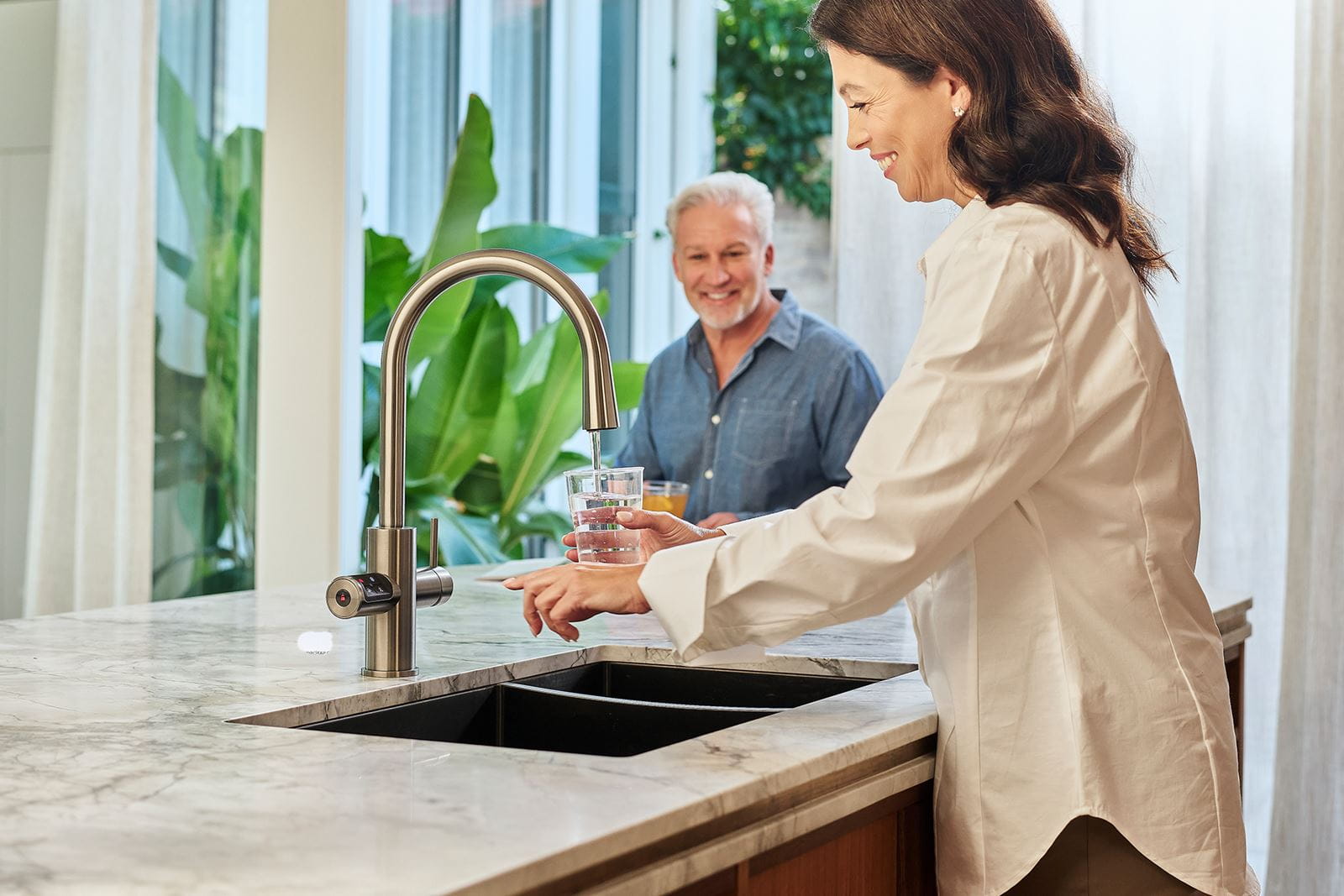
The Zenith HydroTap uses under-sink filtration, but it goes well beyond a standard filter. It's a complete drinking water system.
At its core is MicroPurity filtration at 0.2 microns, using Triple Action Technology – activated carbon, microfiltration and an electropositive membrane working together. The system is independently certified to NSF/ANSI 42, 53 and 401, reducing microplastics, lead, asbestos, sediment, chlorine, bacteria, Cryptosporidium and Giardia, and 99.4% of total PFAS.*
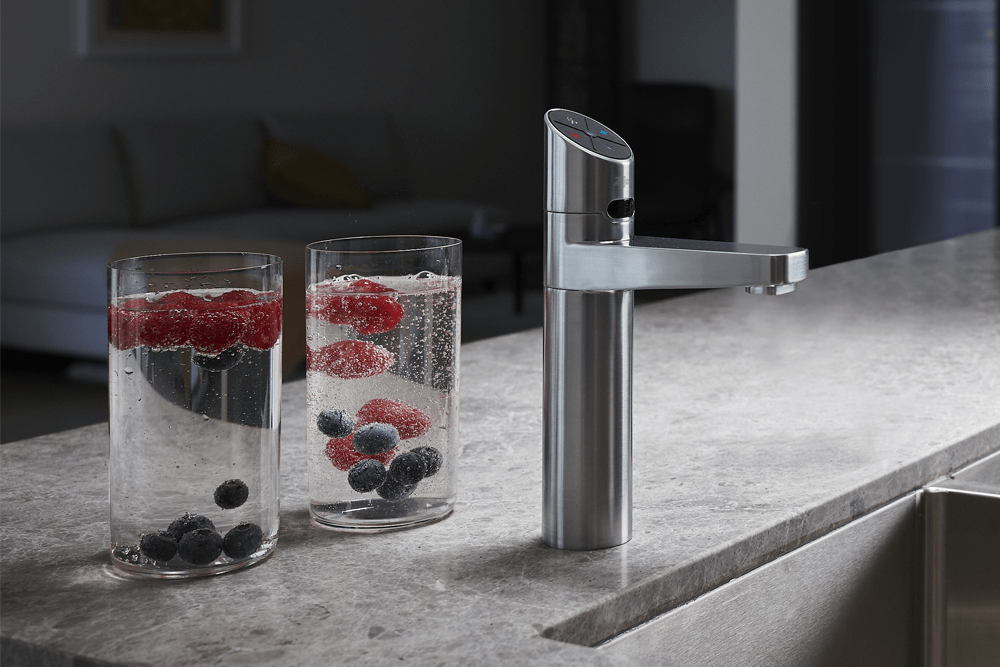
Beyond filtration, HydroTap delivers instant filtered boiling, chilled and sparkling water from a single tap. No kettle, jug, bottles, or clutter. Multiple tap styles and seven finishes let you match it to your kitchen design.
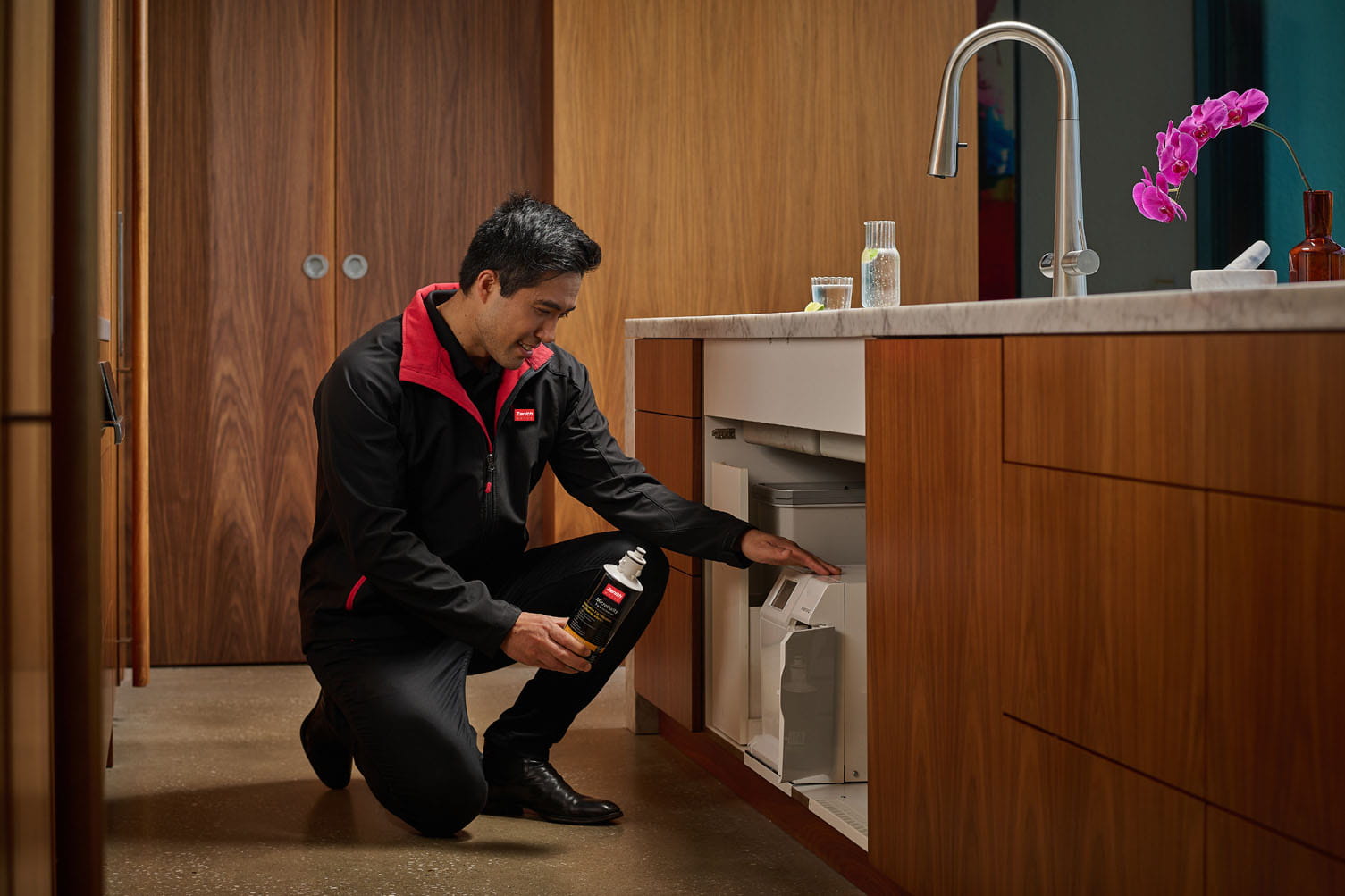
Designed and manufactured in Sydney for more than 75 years, Zenith Water backs every HydroTap with a national network of 130+ certified technicians and 350 service providers. And when your filters reach the end of their life, Zenith's filter recycling program keeps them out of landfill.
Learn more about how Zenith's under-sink filtration works, or explore how to filter your tap water for more about drinking water in your area.
Learn more about the HydroTap or explore the full range.
Frequently asked questions
What is the best type of water filter for New Zealand homes?
For most households on standard town water, a certified under-sink carbon system offers the best balance of performance, convenience and long-term value. Look for certifications across NSF/ANSI 42, 53 and 401. If you want filtration combined with instant boiling, chilled or sparkling water, the Zenith HydroTap brings everything together in a single system.
Do I need a water filter if I'm on town water?
Not necessarily; New Zealand tap water meets strict national standards. But filtration can reduce residual chlorine taste, PFAS, microplastics and other substances that treatment plants aren't designed to remove. Whether it's worth it depends on your water quality, your household's needs and what matters to you. Read more: Is tap water safe to drink in New Zealand?
Can water filters remove PFAS?
Yes, but only certain filter types. Certified activated carbon systems (tested to NSF/ANSI 53) and reverse osmosis are the two proven methods for reducing PFAS in drinking water. Boiling water does not remove PFAS. If PFAS reduction is important to you, check that your filter has been independently certified – not all filters that claim to reduce PFAS have been tested to do so. Learn more: Can PFAS be filtered out of water?
How often should I replace my water filter?
It depends on the type. Jug filters: every one to three months. Tap-mounted: every two to four months. Under-sink carbon: every six to twelve months. RO membranes: every two to three years (with pre-filters replaced more frequently). Always follow the manufacturer's recommended schedule, because overdue filters can harbour bacteria and actually reduce water quality rather than improve it. Browse replacement filters and CO₂
* Zenith MicroPurity filters sizes 1 and 1.5 (93701 and 93702) are certified to NSF/ANSI Standard 53 to reduce 99.4% of Total PFAS (average reduction).