


Reverse Osmosis Filtration vs Carbon: 2026 Guide | Zenith Water
05-11-26

Reverse Osmosis Filtration vs Carbon Filtration: An Honest Comparison
Reverse osmosis filtration is the most thorough home water treatment available. But it comes with significant trade-offs (wastewater, mineral loss, plumbing complexity) and it isn't always the right fit for your kitchen.
This guide compares reverse osmosis and activated carbon filtration on what matters in New Zealand homes: how each technology works, what each is certified to remove, and which one suits your home based on your water source and what you need filtered.
How reverse osmosis filtration works
Reverse osmosis (RO) forces water through a semi-permeable membrane with pores around 0.0001 microns – roughly 5,000 times finer than a standard carbon filter. That's small enough to block dissolved salts, heavy metals and most organic compounds.
You can find them as benchtop, under-sink or whole house systems. Regardless of the size, most home RO systems use three to five stages.
A basic system uses a sediment pre-filter and an activated carbon stage to protect the membrane from chlorine and particles. The RO membrane does the heavy separation. Then a post-filter polishes the taste.
A standard five-stage under-sink system (sediment filter, carbon pre-filter, RO membrane, carbon post-filter and a remineralisation stage) is a common setup. Seven-stage systems add extra steps such as alkaline or hydrogen enrichment to address the mineral stripping issue.
The result is extremely thorough filtration. But the process requires a storage tank (RO is slow, so filtered water is held ready), a drain connection for wastewater, and typically a dedicated tap or dispenser.
Countertop units offer a simpler install with no plumbing changes, but typically filter more slowly and hold less water.
It’s worth noting that carbon filtration plays a key role inside most RO systems. The pre-filter stage uses activated carbon to remove chlorine (which would damage the membrane), and the post-filter uses it again to improve taste. Without carbon doing this work, the RO membrane wouldn’t last or perform as well.
How activated carbon filtration works
Carbon filtration works differently. Rather than physically blocking contaminants by size, it uses adsorption, where contaminants bind to the surface of the carbon as water passes through. The carbon's porous structure gives it a very large surface area for trapping chemical compounds.
Standard granular activated carbon (GAC) filters operate at around 0.5 to 5 microns and are effective against chlorine, volatile organic compounds and taste and odour issues.
Carbon block filters, the type used in most under-sink systems, pack the carbon more densely for finer filtration and more consistent performance.
At the advanced end, multi-stage carbon block systems filter to 0.2 microns, combining activated carbon with microfiltration to target a broader range of contaminants including PFAS, lead, microplastics and cysts (but only when independently certified to do so).
What each technology removes, and what it doesn't
That’s how the technology works, but certification is just as important. A filter is only as good as what it's been independently tested to reduce.
|
Reverse osmosis filtration ( when certified to NSF/ANSI 58) |
Certified carbon filtration (0.2 µm) |
|
|
Chlorine, taste, odour |
✔ (via carbon pre/post-filter) |
✔ (NSF/ANSI 42) |
|
PFAS |
✔ |
✔ when certified to NSF/ANSI 53 |
|
Lead |
✔ |
✔ when certified to NSF/ANSI 53 |
|
Microplastics |
✔ |
✔ when certified to NSF/ANSI 401 |
|
Cysts (Cryptosporidium, Giardia) |
✔ |
✔ when certified to NSF/ANSI 53 |
|
Sediment |
✔ |
✔ |
|
Fluoride |
✔ |
✗ |
|
Dissolved salts / TDS |
✔ |
✗ |
|
Nitrates |
✔ |
✗ |
|
Beneficial minerals (calcium, magnesium) |
Stripped (unless remineralised) |
Retained |
The bottom three rows are where the technologies diverge. If your priority is removing fluoride, dissolved salts or nitrates, reverse osmosis is the stronger technology. Carbon filtration doesn't target these.
But for the contaminants most relevant to New Zealand homes on standard tap water—contaminants such as chlorine, PFAS, lead, microplastics and microbial cysts—a certified carbon system can match RO's practical performance, provided it carries the right certifications.
In New Zealand, plumbed-in systems must also comply with NZ Building Code Clause G12 (Water Supplies) and AS/NZS 3497. These sit within New Zealand’s broader Drinking Water Standards (managed by Taumata Arowai)
The real trade-offs for your kitchen
Beyond contaminant coverage, there are practical differences that affect daily life.
Wastewater
Reverse osmosis systems produce three to four litres of wastewater for every litre of filtered water. For a household filtering around five litres of drinking and cooking water a day, that’s roughly 5,500 to 7,300 litres of water down the drain each year. An activated carbon filter produces no wastewater at all.
Mineral retention
Reverse osmosis strips calcium and magnesium along with contaminants. A 2023 study published in Frontiers in Nutrition found that children who drank very low-mineral water over four years showed elevated cardiovascular risk markers compared with those drinking mineral-containing water.
The research is still emerging, but it may be something you want to consider, especially for households relying on RO as their primary drinking water source. Carbon filtration retains these minerals naturally. You’ll need to add these essential minerals back into your drinking water if you use an RO system.
Installation and flow
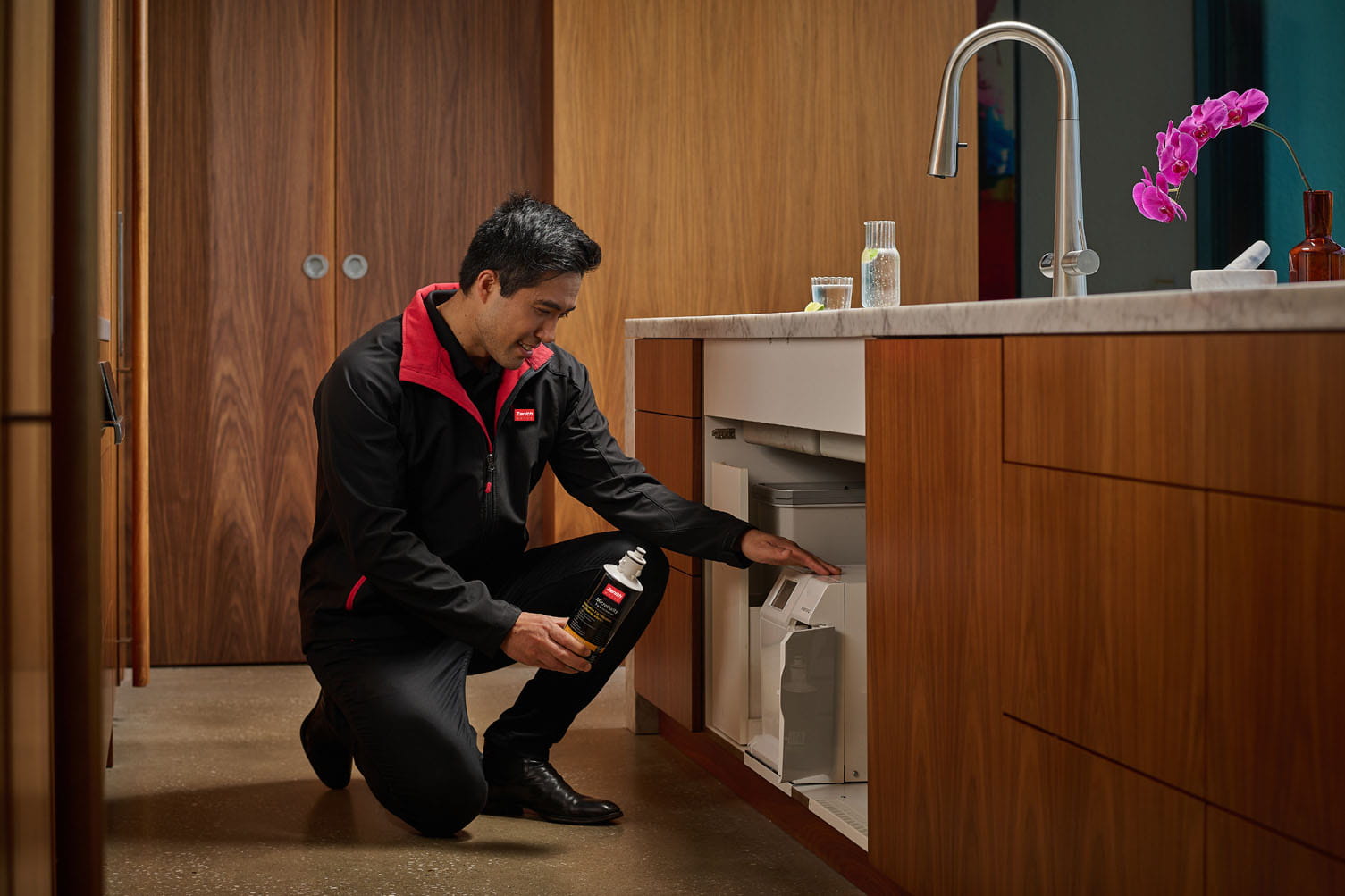
Reverse osmosis requires a storage tank, a drain line for waste, and often a dedicated dispenser. Under-sink carbon connects to your existing cold water supply and delivers filtered water at mains pressure; no tank, waiting, or additional tap.
Maintenance
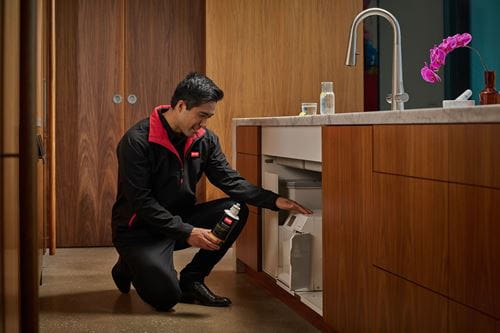
Most reverse osmosis systems have three to five filter stages on different replacement schedules (pre-filters every 6-12 months, membranes every 2-3 years). A quality under-sink carbon system typically uses a single cartridge, replaced every 6-12 months.
None of this makes RO a bad technology. For homes on bore or tank water, with confirmed contamination, or where fluoride removal is specifically needed, it remains the right choice. But for most New Zealand kitchens on treated water, it's usually more than the situation calls for.
For a broader look at filtration options: How to filter your tap water
So which one do you actually need?
It comes down to two things: your water source and the specific contaminants you need to address.
You're on treated tap water and concerned about PFAS, chlorine, lead or microplastics
A certified under-sink carbon system handles these without wastewater, mineral loss or a storage tank. Look for independent certification to NSF/ANSI 42, 53 and 401.
You're on bore or tank water, have confirmed contamination, or need to remove fluoride or dissolved solids
Reverse osmosis is the stronger technology for these specific situations.
You want whole-property protection and drinking water precision
Consider a whole-house system for broad sediment and chlorine reduction, paired with a point-of-use under-sink system for the water you actually drink and cook with.
Zenith's approach: carbon filtration, engineered further
We don’t manufacture reverse osmosis filtration. Zenith Water engineered carbon filtration to close the gap with RO where it matters most for treated water.
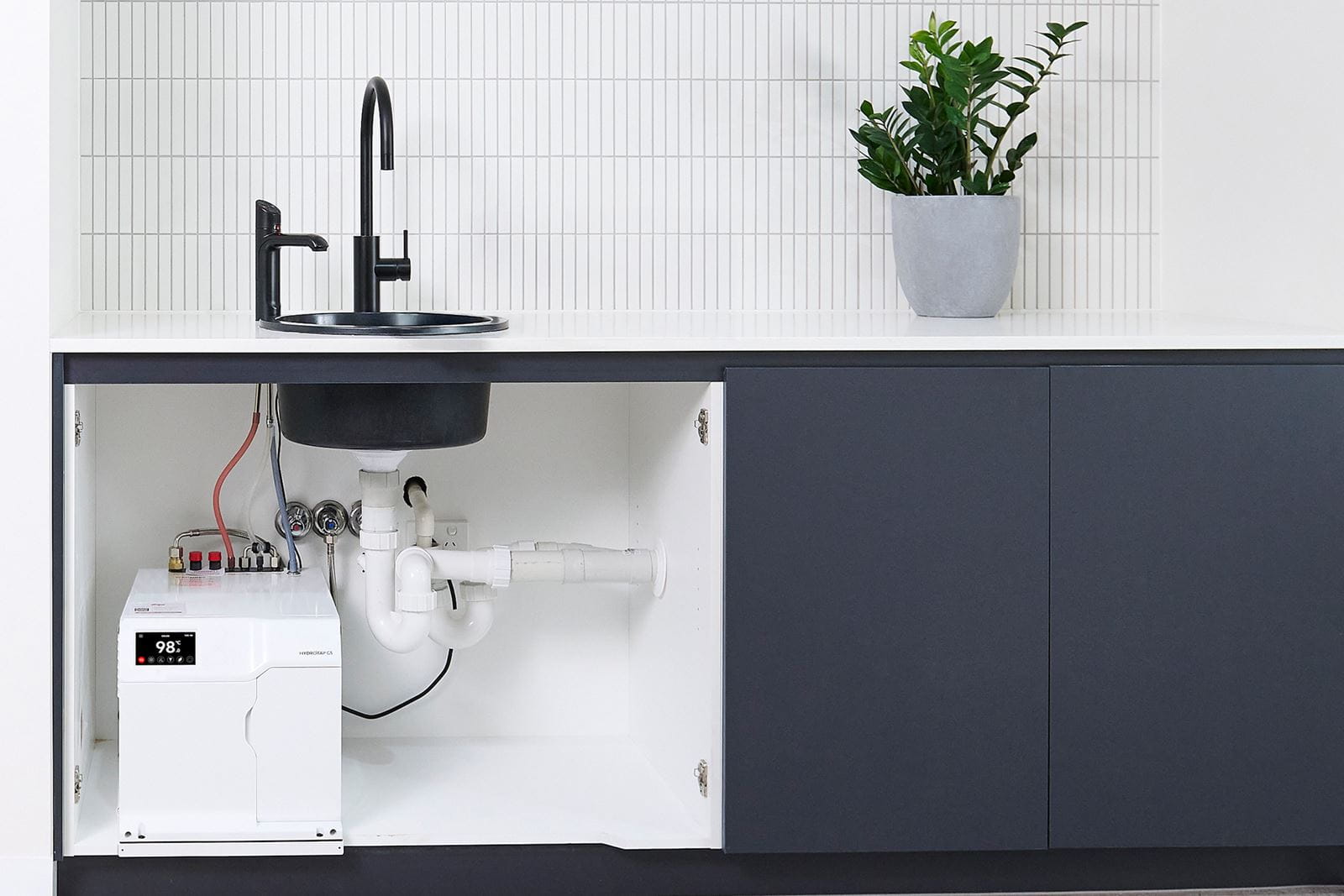
At the core of the HydroTap is MicroPurity filtration at 0.2 microns, using Triple Action Technology – activated carbon, microfiltration and an electropositive membrane working together. The system is independently certified to NSF/ANSI 42, 53 and 401, reducing chlorine, lead, sediment, microplastics, bacteria, cysts, asbestos, and 99.4% of total PFAS.*
Zero wastewater. Beneficial minerals retained. Plumbed into your existing cold water supply with no storage tank.
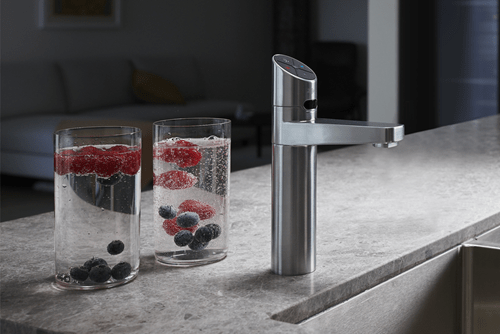
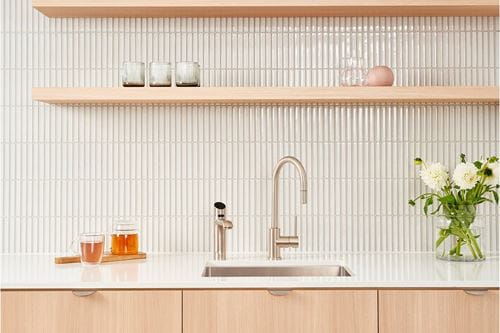
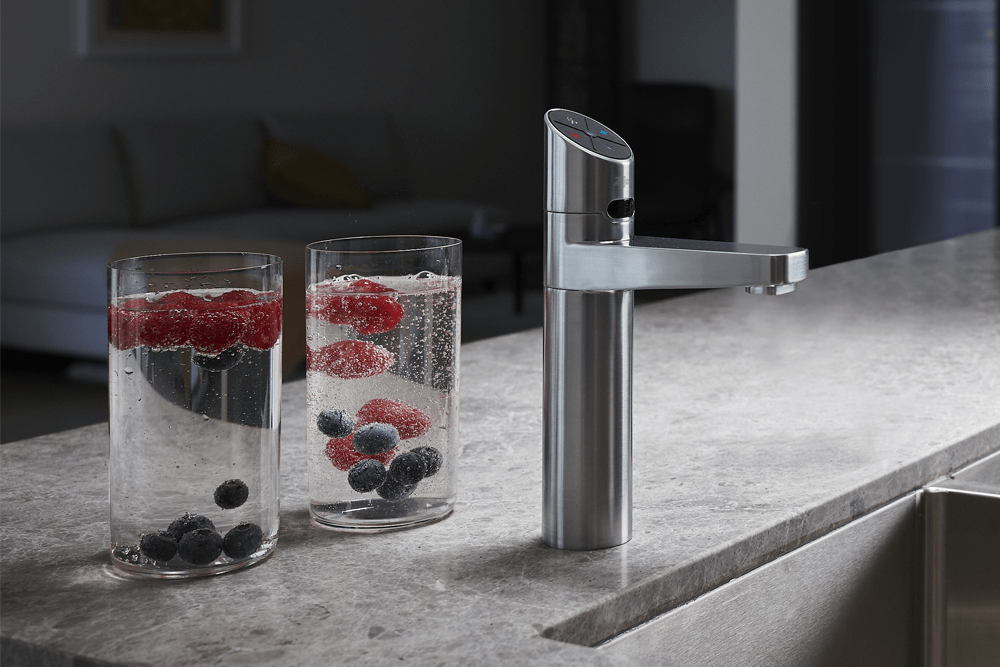
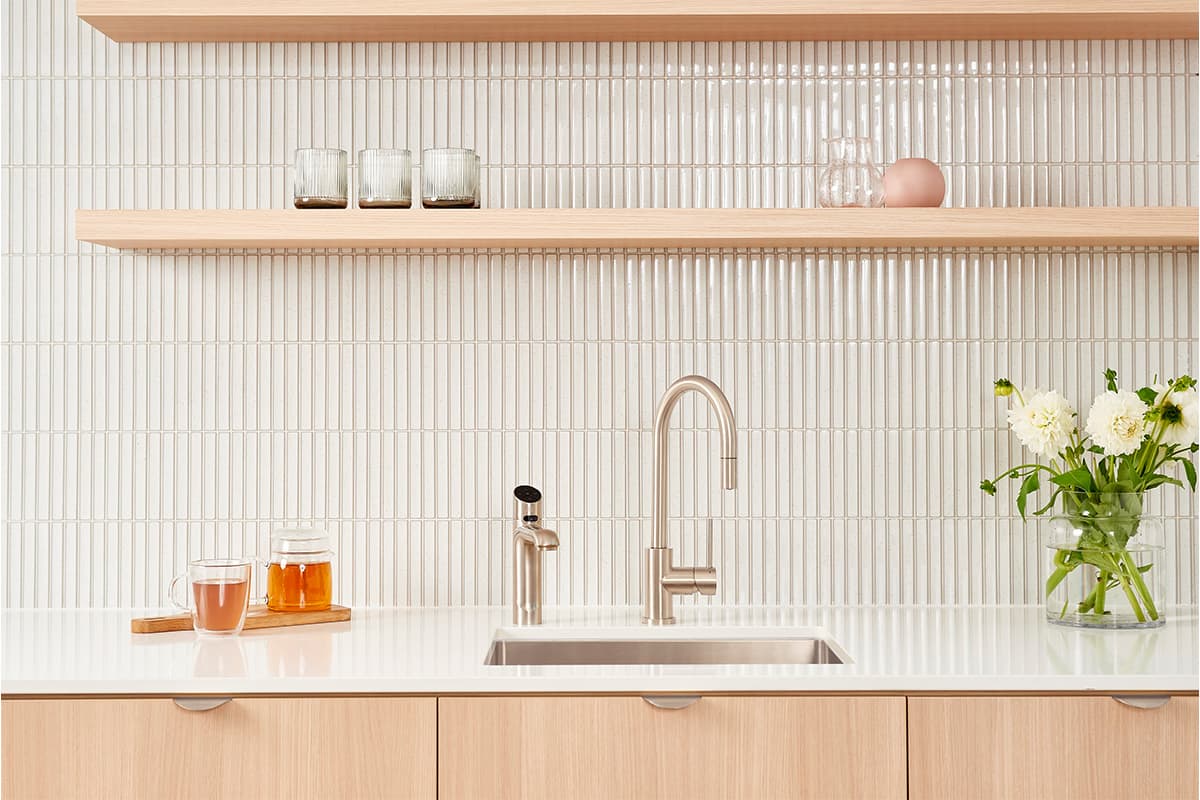
And HydroTap goes beyond filtration. It's a complete drinking water system, delivering instant filtered boiling, chilled and sparkling water from a single tap. No kettle, no bottles, no bench clutter. Multiple tap styles and seven finishes let you match it to your kitchen.
FAQ: Reverse osmosis filtration vs activated carbon
Is reverse osmosis water healthy to drink?
RO water is safe to drink. The question is what it removes alongside contaminants – including calcium and magnesium that contribute to your daily mineral intake. Emerging research has linked long-term consumption of very low-mineral water to changes in cardiovascular and bone-density markers, though more study is needed. If you use an RO system, look for one with a remineralisation stage.
Can activated carbon filters remove PFAS?
Yes, when independently certified to NSF/ANSI 53. Not all carbon filters carry this certification, so check before you buy. The filtration method, pore size and contact time all affect performance.
Do I need reverse osmosis if I'm on town water?
For most Kiwi homes on treated tap water, a certified under-sink carbon system addresses the contaminants that matter most (including PFAS, lead, chlorine and microplastics) without the wastewater or mineral loss that comes with RO. Learn more about Zenith’s under-sink filtration.
Is reverse osmosis water the same as distilled water?
No. Both produce low-mineral water, but the processes are different. RO uses pressure to force water through a membrane; distillation boils water and condenses the steam. Most modern RO systems include a remineralisation stage to restore calcium and magnesium. Distilled water typically doesn’t, and is more commonly used in appliances and laboratories than as everyday drinking water.
* Zenith MicroPurity filters sizes 1 and 1.5 (93701 and 93702) are certified to NSF/ANSI Standard 53 to reduce 99.4% of Total PFAS (average reduction).